Showing posts with label a. Show all posts

Tuesday, September 26, 2017

Suggestion for Community Service Hours Curating a Community Calendar

Suggestion for Community Service Hours Curating a Community Calendar


http://elmcity.cloudapp.net/ - This is an interesting website which allows you to provide calendar events in several different formats. A great community project would be to aggregate school events in a locality.

download file now

Read more »

Tuesday, September 19, 2017

Stream your webcam to see it through a browser using YawCam

Stream your webcam to see it through a browser using YawCam


YawCam

YawCam, Yet Another Webcam software, this is a free program that, unlike tons of others, will let you easy stream your webcam to see it through your browser.

Now, let�s do this. First download and install.

Let�s configure it. First you need to select the cam you want to use.

YawCam Setting

Now, go to Settings > Edit settings. Copy your public IP and port.

YawCam connection

Now (assuming that you already forwarded the port, otherwise use this) enable the Stream option.

YawCam streaming

Go to the browser and paste the IP followed by the port, like this:

xxx.xxx.xxx.xxx:PORT

Where xxx.xxx.xxx.xxx is your public IP, and PORT is the port that the program is using.

IP

And that�s it. You�ll receive a notification each time someone is watching you. Also, you need to keep the program running to be able to access it, so if you shut it down, no one will be able to access your camera.


download file now

Read more »

Thursday, September 14, 2017

Suikoden The Woven Web of a Century

Suikoden The Woven Web of a Century


Genso Suikoden: The Woven Web of a Century takes place in a world where a monster rises every one hundred years and destroys the world. A young lad, sent 100 years from the future by the mysterious Zephon, is given the task to defeat him.
Both of the hero�s parents are deceased and he is a swordsman from the village of Terube. Jino, his hotheaded childhood friend made the journey through time too. When Myra, Jino�s older sister, isn�t scolding him, she�s the group�s magician. Dukas is a loyal soldier and another one of the game�s main characters.

Suikoden: The Woven Web of a Century begins with the heroes time-traveling to the past so they can learn how to fight from their ancestors. It�s a plot device and also a gameplay mechanic. Konami created a teacher-student relationship system where abilities are actually passed down to characters.
The young heroes from the future have learn battle commands when veteran heroes from the past use them in battle. Each time an an ability is used it raises a skill�s training rate and when it reaches 100% you can use the move in battle.

You can further customize characters using the game�s sub job system. At a dinner event in your game�s base you can pick up sub jobs these let you change equipment profiles like giving a mage a bow, for example.
Suikoden: The Woven Web of a Century has a number of classes like swordsman, magician, lancer, archer, martial artist, ninja, bard, and chemist. The game also has a crafting system where you can create weapons, healing items, and magic stones.

Suikoden: The Woven Web of a Century has six person battles with three characters in the front row and three in back. Konami�s next Suikoden game goes on sale on February 9 for PSP in Japan and has multiple endings for fans to find.

Source: Siliconera

Genso Suikoden: The Woven Web of a Century Image Characters
A lon
Asutoriddo (I bet her english ver would be Astrid)
Bi a ga, Borudon, Damudhin, Dhiromu, Dhucas, Efiru, Folune, Hadamu, Hagaru, Heidoreku, Iria_barukai, Jyaguwan, Kuineria, Makia, Makushimos, Mazarica, Meamei, Muii, Myura, Nido, Noderi, Porokku, Radonien, Regius, Reneferiasu, Rete, rhisuthiru, Roruhu, Rosheru, Rpdoriku, Rugato, Rurusa, Ryuseri, Shujinnkou, Suniru, Toruwado, Yohuru, Zabido, Zefon, Zino, Zoshiomu

Well, am only saving the images in the official site. No renders =p
Others: Logo + 1 artwork + 24 screenshots + 26 promotion video snapshots

Download Link: Mediafire
File Size: 20.46 MB

Suikoden: The Woven Web of a Century Promotion Video Snapshots 


Source: Suikoden: The Woven Web of a Century

download file now

Read more »

Monday, September 11, 2017

SVN Dump Parts Of A Repository

SVN Dump Parts Of A Repository


Assuming the following SVN repo structure:
- repository root
| - project1
| - project2
| - project3
To dump the project1 history into a portable, re-creatable format, first you use svnadmin dump, like this:
svnadmin dump [path to repo] > repo.dump
Which creates a dump of the entire repository into a file called repo.dump. This might take some time and is CPU intensive so it would be best to perform this outside of normal work hours...
Then use svndumpfilter to filter just for the project1 folder (see folder tree above):
svndumpfilter include project1 < repo.dump > project1.dump
If you have nested repositories, then it breaks with a syntax error. To get around this you need to run the dump multiple times using the �exclude� directive until you have what you want:
svndumpfilter exclude project2 < repo.dump >> project1.dump
svndumpfilter exclude project3 < project1.dump >> project1.dump
At the end you get a full svn repository that could be re-created anywhere, like this:
svnadmin create /var/svn/project1svnadmin load /var/svn/project1 < project1.dump
mkdir -p ~/workingcopies/project1svn co file:///var/svn/project1~/workingcopies/project1/

download file now

Read more »

Friday, September 8, 2017

Studio Chhaya Wellawatte Colombo Sri Lanka A Review

Studio Chhaya Wellawatte Colombo Sri Lanka A Review


Sometimes, online reviews can be deceiving. Chhaya studio (also known as Studio Chhaya), Wellawatte is one of the most popular studios in Colombo for wedding/reception/engagement photos, with near 5-* review in the Facebook rating. However, how much can we trust these ratings? My experience would just give them 1-*. The final CD they gave us did not even have the registration photos. Just the crazy outdoor photos. How can we even trust these guys?

1. They did not respect the time. I was promised that the photos will be sent by email in 1.5 months (means, 22nd Dec). They eventually sent on the 22nd Jan (one month late), after several international calls from Portugal.

2. Chhaya studio agreed to offer the soft-copy of the photos by email. But the most important ones sent were in fact very low quality ones (they look like taken in a toy camera or a potato). When asked, they are requesting more payment for higher quality photos.

It is funny that when we were discussing the prices, they mentioned that they will offer the photos by email in 1.5 months. They did not mention a word about 2,500 LKR or that we will have to wait till the last day of album delivery. They surely did not indicate that the photos sent by email would be of very bad quality. So we had already paid the full amount even before seeing the photos.

Now their reply when asking for the photos soft-copy was,

"The quality of the images were increased as per your request. These images are not at their best quality, that is they are not in HD.These images are sent to the customers only to check if they want the particular image printed. The quality of the printed image will be at its best. As per our company norms, we do not mail customers high quality edited images. The high quality images are only given on the day of the album delivery, after an extra payment of Sri Lankan Rs.2500/= "

Also the photos were initially sent to another person Pradeep Chandran (kkpradeepan@gmail.com). Now a random guy also has our photos. :S They even claimed that I gave them the wrong email address, instead of accepting their mistake (which is the biggest joke, as if I do not know my name and email address).

My advise is, do not trust the web reviews. Discuss in detail when you are choosing a photographer/videographer. Try to see and understand whether there is some trap or fine-print. Not sure whether they treat all their customers in this way (probably not, since I did not see much negative reviews on them yet). Probably only us, just because we are not in Sri Lanka? Please let me know in comments, if you have had faced similar issues with your photo studios and how did you handle it.

download file now

Read more »

Thursday, August 31, 2017

Submit a Complete Sitemap of your Blogger Blog to Google for Better Indexing

Submit a Complete Sitemap of your Blogger Blog to Google for Better Indexing


The Problem with Blogger Sitemap Files

Ideally, the sitemap file should contain all URLs of a site but if your blog is hosted on blogspot.com (or if you are using a self-hosted version of Blogger with a custom domain), youll be surprised to know that the default sitemap file (see example) contains only the 26 most recent pages of your blog.
Thats a bad thing because some of your older blog pages, that are missing from the system-generated sitemap file, may never get indexed in search engines. Theres however a simple solution to fix this problem.

Generate a Complete Sitemap for your Blogger Blog

Step 1: If you havent done this already, sign-in to your Google Webmasters account and add your blog. For details, check this video tutorial on how to add a blog to Google.
Step 2: Once your blog is added to Google, open the Sitemap Generator and type the full address of your blogspot blog (or your self-hosted Blogger blog).


Once youre Done with adding all th sitemap to the webmaster Your Dashboard should be like this


download file now

Read more »

Monday, August 28, 2017

Supporting a Microcontroller Course with Hardware

Supporting a Microcontroller Course with Hardware


If you have come to this article for a prescription then I am afraid you are in the wrong place. I have structured this piece as a list of questions you need to answer to obtain the microcontroller that really suits your wants and needs. I have included the answers that work for me at the end to show how I have answered my needs.

Teaching microcontrollers always starts with the architecture. Sadly this is hardly ever a process that starts with a clean sheet. Each university or company typically has historical investments in a few preferred architectures and sticks to them like glue. Opportunities to change existing courses should always be carefully weighed for the costs and benefits.

ARM LogoIf you are starting from a clean sheet, or reconsidering existing teaching let me urge you to consider the ARM architecture for one incredibly good reason: the prediction that one ARM processor will be manufactured per person per year by 2014 (EE Times). There are already billions out there in the world. If you are not teaching ARM consider very carefully whether you are doing the right thing by your students by leaving this very valuable training out of their studies. If you want other reasons consider you can get ARM powered chips for the same prices as 8 and 16 bit microcontrollers with comparable peripherals that have 32 bit datapaths and high clock speeds from many manufacturers! Access to development kits mounting ARM Cortex-M devices with programmers/debuggers can cost as little as $12.

[It should be no secret that I am an admirer of ARM cores and have been working with ARM for some time now]

What are the course choices?

Excluding budget constraints and existing equipment and if the number of hours in the course is fixed then we can classify courses into three types. These types are based on where the weight of the learning outcomes are placed as well as the existence of suitable hardware and software support. The three categories are:
  • "Bare metal" (bare chips and a programmer/debugger) - This is one of the best ways of achieving learning outcomes that include basic hardware requirements of microcontrollers i.e. clocks, resets, capacitive decoupling, etc. Coding will consider the booting of the microcontroller as well as code to support any peripherals.
  • Interfacing (a PCB with a few LEDs and switches, probably a clock crystal) - Learning outcomes mainly consist of building interfaces to other peripherals and hardware and advanced coding to support the peripherals.
  • Embedded Software (a loaded PCB where every interface or IO connected to an appropriate demonstration peripheral) - This emphasizes coding, probably including a suitable RTOS or algorithms development for embedded systems.
No matter what level of course you decide to support there is one basic point that I think needs to be addressed right now:
On Chip Debugging. Can the actual ASM code and data in RAM be observed while the microprocessor is executing software?
It can be very easy to end up with hardware that will not support any visibility into the microprocessor/microcontroller as its executes software. In my opinion this damages and interferes with your students ability to understand and experiment with code inside the microcontroller. In my opinion on chip debugging is a basic pedagogic requirement for any course, not a "value added extra" [NB It is possible to design courses around this limitation but, really, in the 21st century why should you have to? And why should your students be limited in this way?]

Practical considerations when choosing a course

The main point when considering the three main levels of microcontroller courses you are thinking of teaching is whether you have any electronic laboratory capability, i.e. lab equipment (PC, oscilloscope, function generator, power supply and parts) and trained teaching and support staff or not.
If you have a lab then you can look at implementing any of the levels. If not then go for Embedded Software straight away or establish the lab later. "Bare Metal" and Interfacing are not for you!
As a practical point for "Bare Metal" courses if chips are not available or convertible to a DIP package choose another architecture to teach.
If you have the lab then the investment in development kits may be a factor. The fully featured kits necessary for Embedded Software are the most expensive, and the least effective at supporting the Interfacing course. At best a few GPIO are available for your students to play with.
Homebrew hardware/Custom hardware or commercial? This is always a tricky one and best left to your judgment. A few points to consider are:
  • Have you used the micro before? If not a commercial kit may help, at least for the first few years.
  • Do you really need a custom system? If you are doing something specialist or have an existing investment in expansion hardware then a custom system can be a part of a really interesting and challenging course.
  • Custom hardware needs designing and then supporting i.e. repairing, updating, etc. and often proves much more expensive over time than commercial kit.
Which architecture should be taught?

Bear in mind the three "levels" of course I have just discussed then we can seriously look at which architecture we should support from two points of view: Pedagogic (teaching) and Practical.

Pedagogic
  • Are the functions of the CPU core easy to separate into a simple subset? All real cores tend to have advanced features and blend certain activities due to the need for speed but for training purposes can you keep them separate?
  • Memory access. This is pretty important and in my opinion it should be a single memory space not paged and the ability to directly execute on data in the memory should be limited - i.e. register math
  • Is the architecture RISC or CISC? Teaching any CISC architecture is typically only sensible from a software programmers point of view and even then it doesnt lend itself to a structured course. I would firmly suggest that a RISC form the basis of your courses
Basically I am a RISC fan from a teaching point of view. As I have to teach fundamentals of hardware structure and design as well as software starting from a RISC is a huge help to my students. [As a cheeky point most CISC designs these days suggest a limited subset of functionality be used for speed so teaching that subset is a great idea.]

Practical
  • Confidence/Experience - If you have had success with a design or device then a new device represents a big unknown in terms of software and hardware. Remember those unexpected Errata?
  • Documentation - Typically for a university a huge amount of existing documentation and notes that have built up around the architecture. Think of all the tutorials and lectures that need rewriting!
  • Staff training - Your lab helpers have to know how things work, i.e. does the debugger connect every time? Do you have to reboot the PC if the thing hangs? Does the software have any quirks? (perhaps what quirks does the software have)
These reasons are also very true for companies but I would suggest that the documentation point would be replaced with code libraries when a commercial client is involved.

What hardware?

Here are the factors that I think are most important in choosing a development kit. This is where ARM technologies really score - compared to proprietary architectures there is a real diversity of choice of chip manufacturer with about every possible peripheral included:
  • Cost - labs full of development kit adds up pretty pricey
  • Programmer/debugger cost - see above. Dont forget that many programmer/debuggers are NOT bundled with the development boards. Also if you want your own students to have their own personal boards they are going to need programmer/debuggers.
  • Software - how easy is it to access the compilers and debuggers
  • Robustness - students are pretty hard on kit. How much work are you going to have to do to harden the boards electronically and physically?
  • On chip peripherals - if you are going to teach standard peripherals like USARTs or I2C then make sure they are included in your micro

What software?

We then need to consider the programming environment. Again ARM has a real breadth of choice of IDEs and compilers for ARM based microcontrollers. The following points should be born in mind:
  • Is there a free version for students, and if so how limited is it?
  • Is the full version terribly expensive and under what conditions can it be accessed? Hardware companies have an easier choice when software than purely software companies as for them the software is not their core business.
  • How easy is it to support? There are plenty of development IDEs that require Administrator access to run or access the debugger and are often very unstable or full of bugs*.
[*IDEs with bugs can be a problem for a professional engineer but for students this can be a showstopper. It is often hard enough for them to grasp the correct operation of an IDE/micro/debugger system let alone diagnose a faulty one. Also imagine a whole lab full of machines with full admin access in the hands of students? Note I am painfully experienced in getting limited admin access for certain programs, but really, why would I want to?]

My choices

[These choices are influenced by my relationship with ARM but they may help you work through your own choices. It is important to declare interests.]

The two courses I am planning to support are two Interfacing courses. I also have an eye on project work which involves microcontrollers. Both courses are established and apply different requirements on the hardware that is going to be used.

What architecture?

Looking at ARM architectures for what I wish to achieve it is clear that we should be looking at the current generation of cores, i.e. the Cortex M or A series. The M stands for microcontroller or mixed signal and A for application. From an architectural point of view the simpler M series are clearly preferable. We are looking at Interfacing and the available M series parts are much more suited to that goal in terms of their peripherals. For Embedded Software high end M parts or A parts would be just fine. For bare metal work there are some small pin count M parts which can be adapted to a DIP pinouts but it is more challenging to use ARM for that type of course.

IDE, compiler & debugger

I am looking at using the uVision IDE from Keil (owned by ARM) because:
  • It is compatible with a very wide range of devices from many manufacturers so you are not tied to any one single company. This will allow a lot of reuse of notes if the target microcontroller is withdrawn or updated
  • It has compilers, assemblers, and on chip debugging facilities
  • There is the essential free version for anyone with code size limits which are well under anything you are likely to need - 32kb of code max (MDK-ARM Lite). [ARM typically have always supported universities strongly so a donation of the full version for internal use in teaching and research may be very possible - talk to them]
  • Keil tools are also pretty well behaved as windows programs and receive regular updates to fix bugs. Other IDEs I have used dont even regard some problems as bugs at all!
  • Keil donations are accessible via ARM which doesnt have the sale of development software as its core business with the implications for donations.
This IDE will support both courses quite happily as well as scaling to include larger student projects. This will reduce the amount of repeated documentation needed across the two courses as we will be supporting one IDE.

Development kits

The two courses have quite different requirements. One course needs two boards:
  • One for the students to own by themselves - cost is a very important consideration
  • One with a large amount of IO for the labs and direct access to a memory mapped IO space
  • Both should not have too many built in demonstration hardware (it pushes up the cost and wastes valuable IO capability)
The other course needs a board with native USB connectivity and as much raw access to IO as possible. Both courses need all the boards to be compatible with the Keil uVision IDE/compiler/debugger suite.
Resources to help find suitable ARM development platforms can be found on the university program section of ARMs website. Here are the highlights of the development boards I have considered:

Low cost student owned development board

ST STM32VL-Discovery
The winner: ST STM32VL-Discovery
  • Micro is the ST STM32F100RB, a Cortex-M3 running at 24MHz with 128kb of flash and 8kb of RAM
  • On chip peripherals: 1x ADC, 2x DAC, Timers, 2x I2C, 3x USART, 2x SPI and something called CEC. There is also a DMA unit
  • The programmer/debugger is an ST-Link built onto the top section of the board. It can also be used to program and debug other ST STM32 ARM based microcontrollers using the ARM Serial Wire Debug (SWD) bus
  • The ST-Link is Keil uVision compatible for programming and on chip debugging
  • $12 as of the 11th of July from DigiKey
NXP LPCXpresso
Honourable mention: NXP LPCXpresso
  • LPCXpresso is both an IDE (powered by code_red technology) and a set of development boards for NXPs LPC ARM based microcontrollers
  • Supports various LPC families of microcontrollers based on the ARM Cortex-M3 and simpler Cortex-M0
  • Built onto a (one time detachable) NXP LPC-Link programmer/debugger that is supported by the code_red based IDE
  • $29.95 as of the 11th of July from DigiKey. Note the variety of parts available as well as more complex and higher cost LPCXpresso compatible boards
ARM NXP mbedFor consideration: ARM NXP mbed
  • Needs no special programming hardware or any locally installed software as it is programmed from the mbed website using a web browser. Appears to the PC as a USB stick where if you place a file on it and press a button it programs itself
  • Seriously limited for my purposes by the lack of On Chip Debugging and simplified programming system [NB not due to the NXP micro but due to the requirement to not need locally installed software]
  • This was not a serious candidate for the level of education that I wish to engage in however is a very serious player for courses in high school or the first year of University
  • Does not come with a "standard" programmer/debugger
  • $60 as of the 11th of July from DigiKey

Lab board with native USB connectivity and external memory interface
[NB This board is a Keil product due to my relationship with ARM, not that there are not excellent candidates from other providers.]
[NNB Keil does make excellent boards though!]

Keil MCB9B500 Evaluation Board
The winner: Keil MCB9B500 Evaluation Board
  • Micro is the Fujitsu FM3 MB9BF506, a Cortex-M3 running at 80MHz with 512kb of flash and 64kb of RAM
  • Full physical access to each and every pin on the device
  • On chip peripherals:  USB2.0 Device and Host, 2x CAN, 8 channel DMA, External Bus IF supporting 8/16 bit SRAM, NOR and NAND flash with up to 8 chip selects, 8x USART/CSIO/LIN/I2C Serial ports, 8x Timers, 2x Multi-Function Timers, CRC Accelerator and 3x 16 channel ADCs
  • Apart from a few LEDs, switches, one potentiometer and the USB device and host port all the rest of the IO is accessible via the two fantastic 0.1" pitch dual row sockets. 0.1" pitch headers are the best educational header being sufficiently small to be convenient but strong to take abuse and rough handling
  • Programmed and debugged by the ULINK-ME programmer from Keil (not shown). [NB This is not available for general purchase, only with new kits so be sure to make sure it is included]
  • Compatible with uVision IDE from Keil [NB Obvious, perhaps]
  • $100 as of the 11th of July from DigiKey (I havent linked it here as DigiKey doesnt seem to sell the version with the bundled ULINK-ME but I cant be sure. Buyer Beware)
    [All pictures are copyright their respective owners and are reproduced here for convenience. For owner information consult the images ALT text. ARM, Cortex, Keil, uVision, mbed, LPC, ST-Link, LPC-Link, Fujitsu FM3 and ST Discovery are probably all trademarks of their respective companies.]

      download file now

      Read more »

      Sunday, August 27, 2017

      Studio24 Presented A Redio Mixed A Very Week

      Studio24 Presented A Redio Mixed A Very Week


      Get the new mix today. We promote the interest of the Musicians who dont have enough money to start up they music career. Dont miss this great opportunity to become a super star today.
      Studio24 has presented and mixed radio
      shows on the Underground scene, and still presents a weekly show

      download file now

      Read more »

      Sunday, August 20, 2017

      Styling a select element with jQuery

      Styling a select element with jQuery


      A very good tool can be found here to style select elements with jQuery:
      http://www.bulgaria-web-developers.com/projects/javascript/selectbox/

      The only problem is that it uses some deprecated code so you have to edit it and change .live to .on in its source to make it work.

      download file now

      Read more »

      Wednesday, August 9, 2017

      Subins Games A new Game site from Subins

      Subins Games A new Game site from Subins


      This is my 5th project. The Subins Games. This site is for playing games. 

      Functions

      • Commenting
      • Score saving
      • Play History
      • Add your game
      • Game stats
       (And adding new ones!)

      Like all the other projects this project has used Javascript Library Jquery and the server side language is PHP.
      This sites games is the combination of old PFOGB and G2E.

      The main problem I faced was the merging of two blogs to one. It was very difficult to merge manually.
      So I used Wordpress in my localhost to import posts from blogger and exported the posts in XML format.
      Then I used PHP to insert the XML file contents to MySql Database. Thankyou Wordpress.


      download file now

      Read more »

      Friday, August 4, 2017

      SWTOR Beta Weekend off to a very busy start

      SWTOR Beta Weekend off to a very busy start


      Server status at 5:25PM CST


      download file now

      Read more »

      Thursday, August 3, 2017

      SuperTuxKart 0 9 2 beta a 3D Kart Racing Game released

      SuperTuxKart 0 9 2 beta a 3D Kart Racing Game released


      SuperTuxKart 0.9.2 beta recently released, is a Free 3D kart racing game, with many tracks, characters and modes you can play. You can play with up to 4 friends on one PC, racing against each other, or you can just try beating the computer (a network multiplayer feature is planned).


      supertuxkart 01


      SuperTuxKart Features


      • Over 20 tracks and arenas

      • Split-screen multiplayer support

      • Many game modes
        • Grand Prix

        • Single Race

        • Time Trial

        • Follow-the-leader

        • 3-Strikes Battles


      • Fun characters

      • Free addons repository

      • Runs on Windows, Linux and Mac OS X

      SuperTuxKart 0.9.2 beta changelog


      • Ghost replay races by Benau

      • Battle mode AI by Benau

      • Soccer mode AI by Benau

      • New icy soccer field by samuncle and Benau

      • New subsea track by samuncle

      • New volcano track by Ponzino

      • TTF font rendering by Benau

      • Kart properties refactor by Flakebi

      • Scripting work under the hood

      • Work on the track editor by mhp

      • Tweak to challenges

      • New farm track song by 0zone0ne and Krobonil

      • Bugfixes

      Install SuperTuxKart 0.9.2 on Ubuntu 16.10, Ubuntu 16.04, Ubuntu 15.10, Ubuntu 14.04


      sudo add-apt-repository ppa:stk/daily

      sudo apt-get update

      sudo apt-get install supertuxkart-data

      Remove SuperTuxKart 0.9.2 from Ubuntu 16.10, Ubuntu 16.04, Ubuntu 15.10, Ubuntu 14.04


      sudo apt-get remove supertuxkart

      download file now

      Read more »

      Wednesday, August 2, 2017

      Stubbs The Zombie In Rebel Without A Pulse Game

      Stubbs The Zombie In Rebel Without A Pulse Game


      Cara Membobol Anti CTRL + U di Blog
      Trik Melawan Script Anti CTRL + U | Sebenarnya saya tidak bermaksud untuk nulis artikel ini, ide ini muncul ketika saya jalan - jalan di dokumen yang berjudul "Backup Script Blogger" kemudian ketemu dengan judul script "ANTI CTRL-U" Langsung deh saya pasang, dan berhasil menampilkan gambar "!!!Deteksi Plagiat!!!", saat itu juga saya berfikir, bagaimana caranya kalau ingin lihat source code di blog lain yang di dalam HTML ada script Anti CTRL + U? Sriptnya kurang lebih seperti ini :

      <body oncontextmenu=return false; onkeydown=return false; onmousedown=return false;> 
      saya tidak tau kenapa saya bisa membobol script CTRL + U pada setiap blog dan website orang, Mantap! 
      Analisa saya :

      CTRL + U  itu berarti ada kaitannya dengan Keyboard yaitu di tombol Ctrl dan U, jadi saya bisa langsung ambil kesimpulan bahwa Anti CTRL+U tidak ada kaitannya dengan mouse atau meng-klik tombol di Web Brower atau tidak ada kaitannya jika Saya ketikan sesuatu yang tidak ada unsur CTRL + U secara langsung. 

      Sebagai kelinci percobaan adalah blog orang ketika saya mencari tugas akhir sekolah,awal mulanya untuk kaum awam mungkin sulit apalagi ketika waktu itu saya sedang mengerjakan tugas akhir sekolah dengan mencari artikel diblog orang dan dimana artikel tersebut tidak bisa di COPAS !  Sialan haha , memang artikel yang saya kunjungi di blog itu sungguh bagus mungkin sang pemilik blog tak ingin karya tulis dan hak ciptanya pun di ambil oleh orang begitu saja .. tapi saya tak kehabisan akal untuk ingin membobol script anti CTRL + U yang terpasang diblog itu, mungkin  saya yang masih awam dunia web apalagi script pada waktu itu tapi anehnya saya kurang lebih butuh waktu hanya 30 detik saja melihat source code artikel blog itu kemudian langsung saya copas artikel di blog itu lalu dipindahkan di ms word sebagai tugas sekolah hehe.. cara nya mudah sekali sob, sehebat apapun  orang yang jago coding script anti CTRL + U diblog akan tembus dengan trik saya ini, cara Pertama menggunakan browser GOOGLE CHROME  maka script yang ada anti CTRL + U di blog/website itu  akan tembus tak berdaya lalu dengan mudahnya bisa kembali melihat source code dengan tekan CTRL + U atau jika kalian menggunakan Browser lain bisa Ketik Code Seperti di bawah ini Support Di Semua Browser kayaknya si tapi di coba aja deh :

      Cara Kedua, ini adalah langkah lebih cepat dan paling mudah mengintip source code yang di anti ctrl-u.
      Perhatikan baik - baik :

      view-source:http://URL TARGET
      Ketikan itu di address browser, ganti URL dengan blog yang akan anda intip.
      Nah itu tadi adalah trik melawan script anti ctrl+u. Selamat Mencoba : D

      download file now

      Read more »

      Monday, April 13, 2015

      Tutorial Trocando a roupa das sims grávidas com o Master Controller no The Sims 3

       
      DESCRIÇÃO:
      Muitos jogadores não gostam e se incomodam com as roupas das grávidas no The Sims 3, realmente as roupas das sims são feias e você não consegue trocar enquanto elas estão grávidas, aqui vamos ensinar à vocês como trocar a roupa das sims grávidas com o mod Master Controller, é muito fácil!


      Primeiramente, deixaremos claro que é possível planejar a roupa das grávidas antes da barriga aparecer. Quando a sim ainda estiver com os sintomas de enjoo desconhecido você pode ir no armário e planejar a roupa dela.
      OBS: Todas as roupas femininas da expansão Gerações são compatíveis com a gravidez das sims, mas mesmo assim depois que a barriga aparecer não será possível trocar sem usar mod.


      Se sua sim já está grávida e você não planejou antes a roupa, será necessário baixar esse mod: Master Controller 
      (link direto para patch 1.55, acesse aqui para baixar da sua atual versão, requer somente o Base-Mod)
      Instale o mod como um package normal (clique aqui se não souber instalar arquivos packages).

       
      1° Passo: Clique na sua sim e em seguida em NRaas.

       
      2º Passo: Depois clique na opção Master Controller.

       
      3° Passo: Em seguida irá aparecer uma janela com várias opção, entre elas escolha a opção "Básico".

       
      4° Passo: Novamente irá aparecer uma outra janela e nela clique na opção "Roupa".
      5° Passo: Em seguida uma janela com todas as suas roupas planejadas (anteriormente) irão aparecer, (todas as suas roupas normais de antes), é só clicar e escolher a roupa que deseja usar no momento.

       
      6° Passo: Note que algumas roupas irão fazer a barriga da sim não aparecer, por isso recomendamos que baixe roupas que são compatíveis com a gravidez.

       
      OBS: Roupas de banho personalizadas - em sua maioria - funcionam, mesmo quando não são ditas como compatíveis com a gravidez.

      Divirta-se!

      Créditos: Downs Sims 3
      Mod: NRaas Industries
      Read more »

      Monday, April 6, 2015

      Baixar A Grande Guerra de Pegadinhas para Android


       A Grande Guerra de Pegadinhas  v1.0.0 APK + OBB


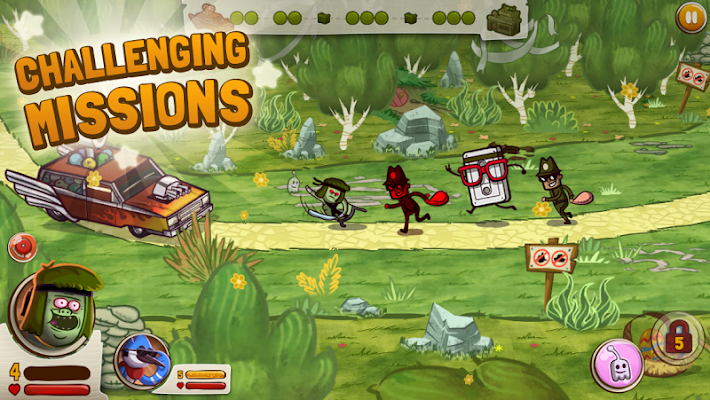
      Ajuda Mordecai, Rigby, Muscle Man, Salta e seus outros favoritos Regular Show levar o parque de volta de Gene e seus capangas com uma infinidade de poderes relacionados com a brincadeira!

      A Grande Guerra de pegadinhas play.google.com.prankwar


      UMA NOVA VERSÃO DE APENAS UM SHOW!
      Quando Gene, o administrador do parque rival, East Pines, adquire uma máquina do tempo, ele volta ao passado para ganhar a guerra de pegadinhas e assumir o comando do parque. Agora, caberá aos nossos heróis recuperá-lo, mas não será fácil! O jogo também apresenta um novo design dos personagens e novos estilos de animação para a sua máxima diversão.

      JOGUE NO ATAQUE E NA DEFESA!
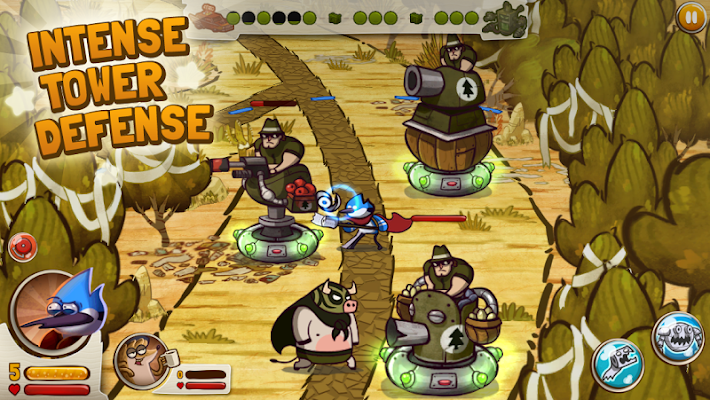
      Em um jogo cheio de ação que inclui defesa de torres, você atacará as torres dos inimigos e as derrubará para construir suas próprias torres de defesa. Tudo enquanto enfrenta o exército gigante de Gene, composto por vigias de parque, ursos robóticos, cachorros-quentes selvagens, fitas cassete dançantes e muito mais!

      QUE COMECEM AS PEGADINHAS!
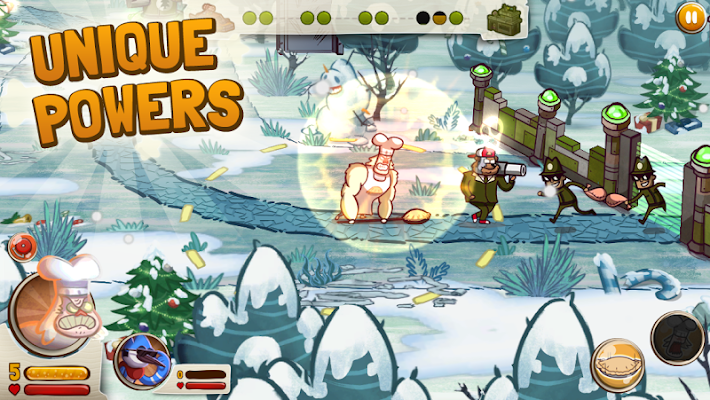
      Jogue como Mordecai, Rigby, Musculoso ou Saltitão. Cada um deles se especializou em um tipo diferente de pegadinha e desenvolveu poderes únicos para acabar com os vilões. Até nas torres é possível pregar peças com ovos, cola, almofadas de pum e outros esquemas para defender seu território.

      QUATRO ESTAÇÕES DE DIVERSÃO!
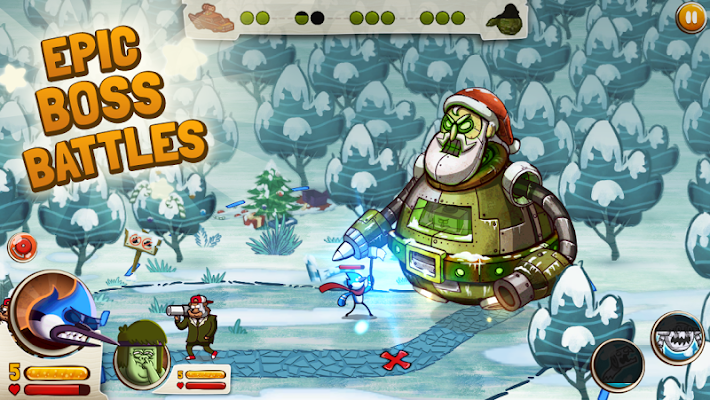
      Esta guerra de pegadinhas não tem fim, com níveis que atravessam o outono, o inverno, a primavera e o verão. Cada estação traz designs diferentes de níveis, com desafios que você não vai se cansar de enfrentar, incluindo quatro batalhas épicas com chefes que testarão suas habilidades ao máximo.

      Enfrente as batalhas mais estúpidas do mundo na GRANDE GUERRA DE PEGADINHAS!


      Screenshots:
      A Grande Guerra Prank - Screenshot
      A Grande Guerra Prank - Screenshot
      A Grande Guerra Prank - Screenshot
      A Grande Guerra Prank - Screenshot
      A Grande Guerra Prank - Screenshot

      Baixar  :  114MB (APK + OBB)


      Obrigatório Android  2.3.3 +


      TUTORIAL PASSO A PASSO 

      **Todos os links para download serão redirecionados para a pagina de propaganda Adf.ly , depois de ser redirecionado aguarde o fim da contagem de 5 segundos e clique em FECHAR PROPAGANDA no canto superior direito, não clique em mais nada que aparecer no site somente no local indicado**.


      1° Passo;
      Baixe o APK  
      • Opção 1 Zippyshare 
      • Opção 2 Mega 
      2° Passo;
      Baixe o OBB
      • Opção 1 Zippyshare 
      • Opção 2 Mega 
      3º Passo;
      Selecione a parte OBB  baixada , clique com o botão direito do mouse e escolha a opção: "extrair para The Great Prank War v1.0.0 Android Passo a Passo". dentro existe a pasta "com.turner.prankwar"

      4º Passo;
      Instale o APK em seu smartphone tablet. No final da instalação você terá duas opções: CONCLUIR ABRIR , clique em CONCLUIR.

      5º Passo;
      Mova a pasta "com.turner.prankwarpara sua MEMORIA INTERNA / Android /obb. (esse procedimento também pode ser feito no seu Cartão de memoria se seu aparelho tiver a função "mover para SD" )

      6º Passo;
      Ligue sua conexão Wi-Fi/3G para fazer verificação de arquivos


      Dicas para usuários:
      • Dificuldade para instalação ?? precisa de ajuda?? Clique aqui
      • Seu aparelho tem pouca memoria interna?? Clique aqui
      • Você ainda não sabe fazer Root?? Clique aqui
      • Seus jogos ficam travando?? Clique aqui
      • Os Jogos que você baixa não funcionam?? Clique aqui
      • Você quer remover as propagandas que aparecem nos aplicativos? Clique aqui
      • Você deseja dinheiro infinito em Jogos? Clique aqui
      • Baixe também o app do Android Passo a Passo e tenha um acesso mais rápido ao blog Clique AQUI
      Read more »

      Saturday, March 14, 2015

      Adiós a Final Fantasy Haeresis XIII

      5 años tras registrar la marca como parte de la compilación Fabula Nova Crystallis, Square Enix ha decidido no renovarla, por lo que dicho título, del cual nunca llegamos a saber más que vagos rumores acerca de ser un MMORPG para PS3, pasa totalmente al olvido. La realidad es que no sabemos si alguna vez llegó a estar en producción y fue cancelado, o simplemente se trató de un registro que, con el tiempo, fue perdiendo importancia para la compañía.

      Con todo, y fijándonos en el diagrama de hace años sobre la compilación (al cual aconsejo que no hagáis demasiado caso, pues está desactualizado), técnicamente, quedarían dos títulos por anunciar, ya que uno de los tres espacios vacíos estaría ya ocupado por Final Fantasy XIII-2.
      Read more »

      Final Fantasy XIII 2 Un vistazo al Cristarium y a nuestros monstruos reclutas

      Famitsu incluye esta semana un vistazo a algunas de las funcionalidades de Final Fantasy XIII-2 de las que hemos recibido imágenes a principios de semana.

      Como podemos ver en la imagen superior, los monstruos que reclutamos también se desarrollan a través del Cristarium. Sin embargo, ellos no precisarán de Puntos de Cristal para avanzar, sino de objetos que se pueden comprar en tiendas o ganar en los combates. Las habilidades que se adquieran o mejoren dependerán de los objetos utilizados. A medida que se expanda el Cristarium, harán falta objetos más raros para avanzar.


      Para los personajes, una expansión del Cristarium significa la posibilidad de elegir entre distintos beneficios tales como la adquisición de un nuevo rol, la posibilidad de equipar accesorios más pesados o un segmento BTC más.


      No sólo es posible modificar la apariencia de los monstruos... ¡También se les puede poner nombre! Además, unos pueden adquirir habilidades de otros, para volverse más poderosos, si sacrificamos a estos primero.

      Hay cuatro tipos de habilidades que pueden heredar unos monstruos de otros: "habilidades de comando", "habilidades de apoyo", "habilidades especiales" y "resistencia". Los dos primeros tipos sólo pueden heredarse si los monstruos implicados poseen el mismo rol.

      Cabe la posibilidad de que el monstruo heredero no obtenga exactamente las mismas habilidades que el sacrificado: si son de roles diferentes, las habilidades que consiga pueden ser completamente nuevas.


      Por otra parte, Famitsu desvela nuevos detalles del argumento, el Umbral de las Eras y la búsqueda de fragmentos.

      Argumento: Se revela la existencia de una localización denominada "Torre Augustia", construida por la Academia para un proyecto cuyos fines son desconocidos. Debido a las alteraciones en la línea espacio-temporal, las salas de dicha torre cambian continuamente.

      Umbral de las Eras: Hay dos tipos de puertas para acceder a nuevas épocas. Las azules se pueden abrir con artefactos comunes, mientras que las amarillas requieren llaves específicas.

      Fragmentos: Hay un total de 160 fragmentos. El número en nuestra posesión aparecerá siempre indicado en la esquina superior izquierda de la pantalla del Umbral de las Eras. Además, también es posible saber cuántos fragmentos se han obtenido en cada época, y así saber dónde están los que faltan.

      Fuente | Andriasang
      Read more »

      Friday, March 13, 2015

      A Trip To The History of Game Consoles Part 1


      Video gaming is a part of our lives for years. Anyone who is interested in technology has a computer or console nowadays. Especially game consoles started to take the place of PC by their easy to use system. But how did consoles come to these days? Ill take you on a trip of the history of old game consoles.

      first game consoleBrown Box

      Brown Box is the first game console in history which was created by a German engineer Ralph Baer in 1967. He is known as the father of the video games. Brown Box could be connected to a TV by a vacuum tube circuit. In the first game for Brown Box, we controlled two squares chasing each other. Afterwards a rifle and 12 more game released for the console.


      video game consoleOdysses

      After Brown Box was released by Baer and his team and presented to the TV manufacturer Magnavox, it was evolved and released again. But this time with another name, Magnavox Odysses. It was 1972 and Odysses was the first commercial game console.


      old game consolesPong

      Atari, which was set up by Nolan Bushnell in 1972, achieved its first big success with Pong in 1975. There were also sounds besides the graphics and that made Pong very successful. After Pongs success, Atari had the same meaning with game console.


      history of game consolesAtari 2600 VCS

      Atari was also known as "Black Box" and you can accept it as grandfather of todays game consoles. In 1977, Atari thought that a single game for a console wasnt enough and released the Atari 2600 which had many games. Also you were able to play more games by using a cartridge. Atari is the one which introduced us the classics like Space Invaders and Missile command.


      game consolesIntellivision

      Intellivision was the first serious opponent of Atari which was released by a firm named Mattel in 1980. That was the beginning of Mattel-Atari competition. But Intellivision games had better graphics and audio. It made game developers take console gaming seriously.


      first game consolesNES

      When Nintendo released the product named NES(Nintendo Entertainment System) in 1985, everybody was suspicious about it. It was known as Famicom in Japan and people liked it with the games like Super Mario Bros, The Legend of Zelda, Final Fantasy, Contra, Mega Man and Metroid.


      first portable game consoleGame Boy

      After the second half of the 80s, Nintendo continued its success with Game Boy. It was released in 1989 and it had 8-bit processor with a single screen color. Tetris game brought the first big success for it. Game Boy was one of the first portable game consoles.


      old game consoleSega Genesis

      In 1989, Sega Genesis stood as an opponent to the NES with 16-bit processor. It had a better hardware than its opponent and this way it attracted more attention. With the games like Sonic the Hedgehog and Electronic Arts sports games which had better graphics than other games at that time, Sega Genesis was one step ahead.


      video game consolesNeo-Geo

      When Neo-Geo was released by SNK in 1990, it had an opportunity to have a big success with its 24-bit processor which means high quality graphics. But... It was a little expensive. Neo-Geos price was 650$ and games price was 200$. That situation kept Neo-Geo away from having a big success.


      history of game consolesSNES

      Nintendo had lost the competition against the Sega Genesis 16-bit processor and counterattacked with SNES(Super NES). In 1991, SNES managed to take the lead with the new versions of Donkey Kong Country, Super Mario, Metroid and Zelda.


      old video game consolesPlayStation

      Release date of Sonys PlayStation is a turning point for the history of game consoles. It was released in 1995 and it introduced us to 3D graphics with its CD-ROM and 32-bit processor. PlayStation had a big success over the world with legendary games like Resident Evil, Gran Turismo, Tekken, Crash Bandicoot and Metal Gear Solid.


      nintendo 64 game consoleNintendo 64

      Nintendo 64 was the last game console which uses cartridge. When it was released in 1996, people were agreed about that it wouldnt have a chance against PlayStation. But they were wrong. Because classic games like Super Mario 64 and The Legend of Zelda Ocarina of Time brought the success to it. Also there were not long loading times as PlayStations. But Nintendo 64 didnt have games as much as PlayStation and that was a big disadvantage for it.


      Read more »